“What does sustainability look like on the ground?”
Sometimes, the best way to understand it is to see it in action. That’s where Front-Day Sustainability comes in, a field-based learning initiative that connects IKEA co-workers with social entrepreneurs from the Instellar & IKEA Social Entrepreneurship Accelerator (I-SEA). Through visits to the Changemakers, co-workers get the chance to see how sustainability and social entrepreneurship are practised in real business settings, while sharing practical insights and perspectives with the entrepreneurs and their teams.
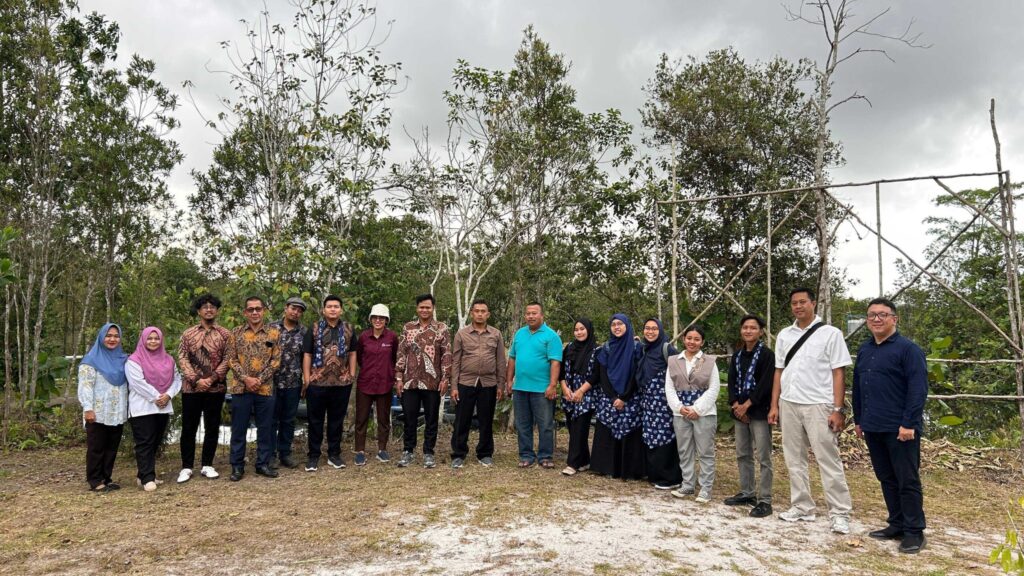
For Cohort 3, 19 IKEA co-workers spent two days visiting two Changemakers in Central Java: Rumah Tenun Magelang on 4 August and Aliet Green in Bantul on 5 August. While one works to preserve Indonesia’s weaving heritage and the other supports smallholder coconut sugar farmers, both show how business can create opportunities for communities while putting sustainable practices into action.
Day 1: Discovering the Journey Behind Sustainable Weaving
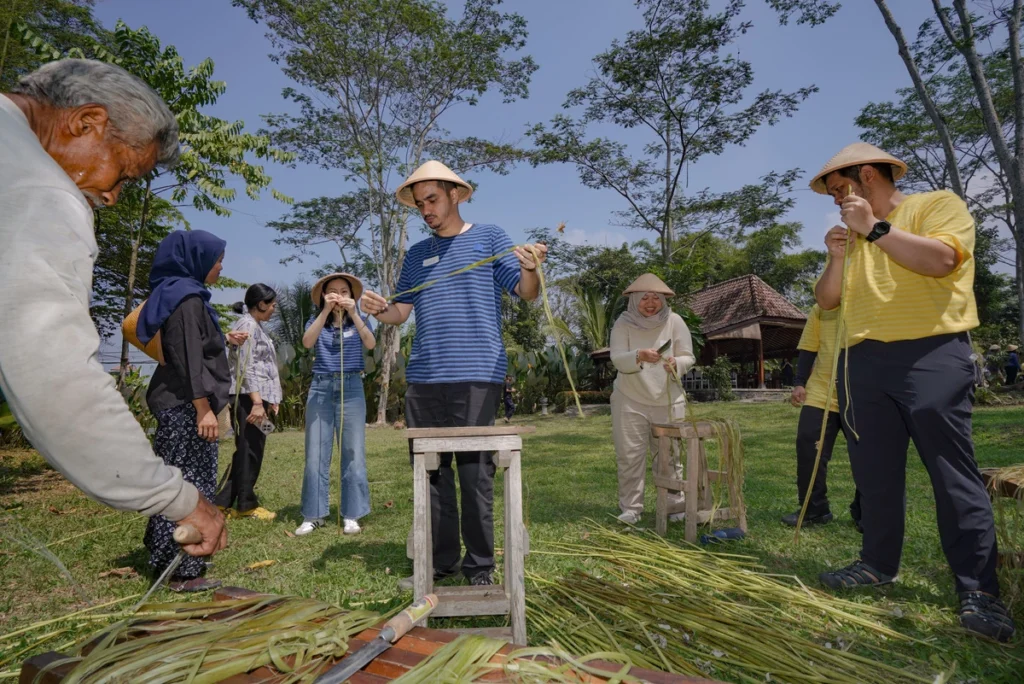
The first day began at Rumah Tenun Magelang (RTM), a subsidiary brand under PT Retota Retail Indonesia. As a mission-driven weaving enterprise, Rumah Tenun Magelang works to preserve Indonesian weaving heritage while creating income opportunities for artisans and workers. Over the past 23 years, RTM has empowered more than 1,000 women through natural fibre processing, while helping rural communities build sustainable livelihoods and keeping traditional weaving practices alive.
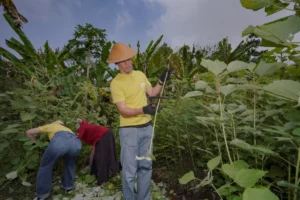
The day followed an end-to-end walk, taking IKEA co-workers through the journey of the natural fibres used by Rumah Tenun Magelang, from their origins to the final woven products. The group started by learning about the different types of natural fibres used by Rumah Tenun Magelang before getting hands-on with the process. They joined a rami harvesting activity, then learned how the fibres are separated and sorted from the plant stems before seeing how they are eventually transformed through the weaving process.
By following each step, IKEA co-workers got a closer look at the people, materials, and processes behind RTM’s products. It showed how much goes into bringing a natural fibre from its source to a finished textile, with each stage requiring different skills, knowledge, and attention to quality.
Sharing Insights Across Perspectives
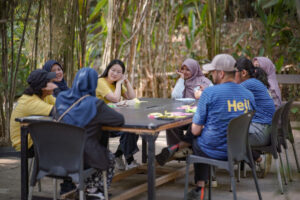
The end-to-end walk also opened up a discussion around Rumah Tenun Magelang’s work. Rather than simply observing, they were invited to consider what felt strong or valuable, what remained challenging or unclear, and what practical ideas Rumah Tenun Magelang could potentially explore further.
As part of the exchange, the conversation touched on areas such as supply chain management, production quality, and market attractiveness. It was an opportunity to see how each part of the process contributes to bringing a product from natural fibre to something ready for the market. After a day of exploring the value chain and exchanging perspectives, the group wrapped up with a reflection session before heading back to the hotel.
For Yusuf Temenggung, Sustainability Specialist at IKEA Supply AG, one of the most memorable parts was seeing how social enterprises can empower communities and create positive impact around them. “What stood out to me was being able to speak directly with social entrepreneurs and the communities they work with, including farmers, weavers, and co-workers. It was meaningful to see the impact they create and how they continue to develop the communities around them.”
Day 2: Following the Journey of Coconut Sugar
The following day brought a completely different product and production context. The group travelled to Bantul, Yogyakarta, to visit Aliet Green, a women-owned regenerative organic enterprise working with smallholder farmers to produce certified and traceable organic products for international markets. To date, Aliet Green has worked with more than 1,500 small family farms, planted over 3,000 dwarf coconut seedlings and 3,000+ agroforestry crops, including vanilla and mangosteen.
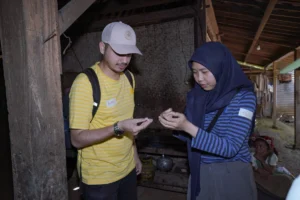
Aliet Green also introduced the group to its “Green Warriors”, a team who support both the farmers and the day-to-day work behind the business. Their role became clearer through an end-to-end walk of Aliet Green’s coconut sugar value chain, which took the group from farmers to Green Warriors and finally to a farmer’s house. Along the way, they saw how coconut sugar is naturally processed and learned more about the people and practices behind the product.
The walk also gave the group a closer look at how Aliet Green connects regenerative farming with market access. Green Warriors work alongside farmers to support sustainable farming practices and maintain quality and traceability, while Aliet Green connects their products to international markets through certification and Fairtrade practices.
Sharing Perspectives Through Leadership
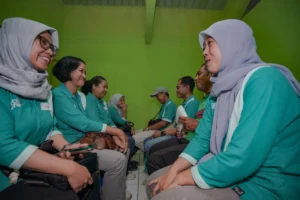
In the afternoon, the focus shifted from the production process to the people behind the organisation. IKEA co-workers joined small-group leadership case discussions with Aliet Green leaders representing different functions, including Production, Facility Maintenance, Sales, Certification, HR, Finance and Accounting, and General Administration.
The conversations explored challenges that leaders may encounter in their everyday work: bringing different teams into alignment, making decisions when information is limited, managing different working styles, and balancing customer expectations with internal capacity.
By sharing experiences from their respective workplaces, both IKEA co-workers and Aliet Green’s leaders had the opportunity to look at these challenges from different perspectives. The conversations added another layer to the visit, showing that sustainable businesses are shaped not only by what they produce, but also by how people work together behind the scenes.
Tasha Sianturi, Co-Worker Engagement Specialist at IKEA Social Entrepreneurship, found the spirit of the social entrepreneurs especially inspiring: “They genuinely care about what they do and think about creating positive social and environmental impact for the communities and environment around them. That became an inspiration for us as social co-workers.”
For Lastiana Yuliandari Utami, Director of Aliet Green, the exchange also offered a moment to reflect on leadership within the organisation. “This experience gave our team the clarity to lead with purpose and make ethical choices part of our everyday routine, building a shared sense of responsibility among team members.”
Conclusion: Connecting People, Practices, and Purpose
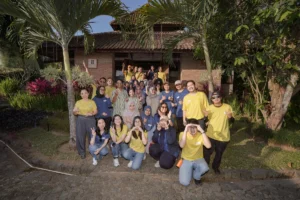
Across the two days, Rumah Tenun Magelang and Aliet Green offered two different perspectives on sustainable business. From natural fibres and traditional weaving in Magelang to regenerative agriculture and coconut sugar in Bantul, IKEA co-workers saw how products are connected to the people, processes, and communities behind them.
More than simply visiting two Changemakers, Front-Day Sustainability created space to step outside the usual working environment, listen to different perspectives, and learn from how others approach their work. Through these connections, the experience brought the spirit of social entrepreneurship a little closer to home—and opened up new possibilities for growing better together.
Reflecting on the visit, Fatka from Rumah Tenun Magelang shared, “IKEA’s visit was a truly meaningful and inspiring experience for our entire team. The feedback, perspectives, questions, and discussions gave us new ideas on how we can further improve our products, production processes, quality, and business development. More than an exchange of knowledge, the visit gave us greater confidence and renewed motivation to keep improving and preserving Indonesia’s natural fibre weaving traditions while developing products that can meet international standards and market expectations.”